

You're Doing It Wrong: Character (Pt. 1)
Why your scripts aren't getting the traction you think they should

Before We Begin…
This post is just the tip of the iceberg.
We can go a whole lot deeper on character than what’s presented in this post.
If you’re struggling to get your scripts read, it might be time for a character tune-up.
I’ll be hosting a free character punch-up workshop sometime in the next month or two for writers looking to strengthen their samples (or shorts / sketches / etc.).
If you’re interested in participating, fill out the brief Google Form below:
Now, let’s go!
A Paradox You’ve (Probably) Experienced
Your script has it all: Action. Dramatic tension. A clear goal. A romantic entanglement. Real stakes…
You’re doing all the right things: You’ve outlined the story to within an inch of its life. It plays out in a classic Dan Harmon / Hero’s Journey circle. The pacing is perfect. You’re paying off the setups, you’re escalating the conflict, you’re saving the cat…
But it’s not landing with audiences.
You’re not getting meetings.
Feedback is… well, let’s just say calls have gone unanswered.
Why?
How can a script that has everything serve us so poorly?
In this episode:
🎭 Why “character is everything” – and why most writers still miss the mark.
😈 The Devil’s trick of self-delusion – how storytellers convince themselves their characters are fine when they’re not.
🤑 Why character is your cheapest special effect – and how it powers a faster, more sustainable creative flywheel.
🤖 Why great characters are AI-proof – and your best defense against the flood of generic content.
My hope is that this post reinforces your belief in developing strong characters and forces you to face your own blind spots regarding the characters in your scripts.
Character is Everything
Character is the beginning and end of every single story, whether it be a TV show, a feature film, a short story, a novel or a comedy routine.
It is the dramatic thrust that moves us through a world and compels us to stick around for 90 minutes or 5 seasons or a 3-hour stageplay (less intermission).
If you can do it well, you’ll be able to captivate an audience and achieve success in this crazy world we call entertainment.
I could create a whole other post – nay, a whole other newsletter – devoted to why character is so important, but for now, let’s focus on the top three reasons:
1. Without it, The Audience Won’t Care
Of all the early challenges our ancestors faced – foraging for food, building shelter, evading predators – it’s the intricacies of social life that proved most complex. If you didn’t do it well, you could be ejected from the tribe, which usually meant death.
Suffice to say, navigating social life was very important.
So our ancestors built maps: How to respond to different personality types, the social faux pas to avoid, cocktail party best practices, etc.
They called these maps stories, and the characters in these stories basically acted as proxies for ourselves. It’s the reason we instinctually feel the same way a character does in our favorite stories.
It’s the reason we laugh when a character feels relief or cry when a character feels heartbreak. It’s the reason our hearts race when scary monster man goes “boo!”1
This alignment has been extensively studied in labs and serves as definitive proof for the importance of strong characters.
Alignment is crucial if you want an audience to lean in and give a shit about your story. It’s – by a country mile – the most important thing you can do as a screenwriter.
2. Character Drives Story
Experienced filmmakers know that the only way anything happens in your story is through its characters.
It’s why even shows like Planet Earth – a nature docu-series without people in it – feature “characters” like a mother baboon finding water for her offspring or a pair of ostriches protecting their egg.
Even when they’re animals, we can’t help but relate to their struggles and want to see them achieve their goals. Without character, we have no goals, and without goals, our “story” is just a series of disconnected events.
3. Character Gives a Story Meaning
Human beings are allergic to randomness.
We are evolutionarily inclined to derive meaning from things, whether or not that meaning exists. And that goes doubly for stories.
If your story is able to deliver that meaning, the audience will gobble it up like Mr. Snarffle at a Nom-Nom buffet.
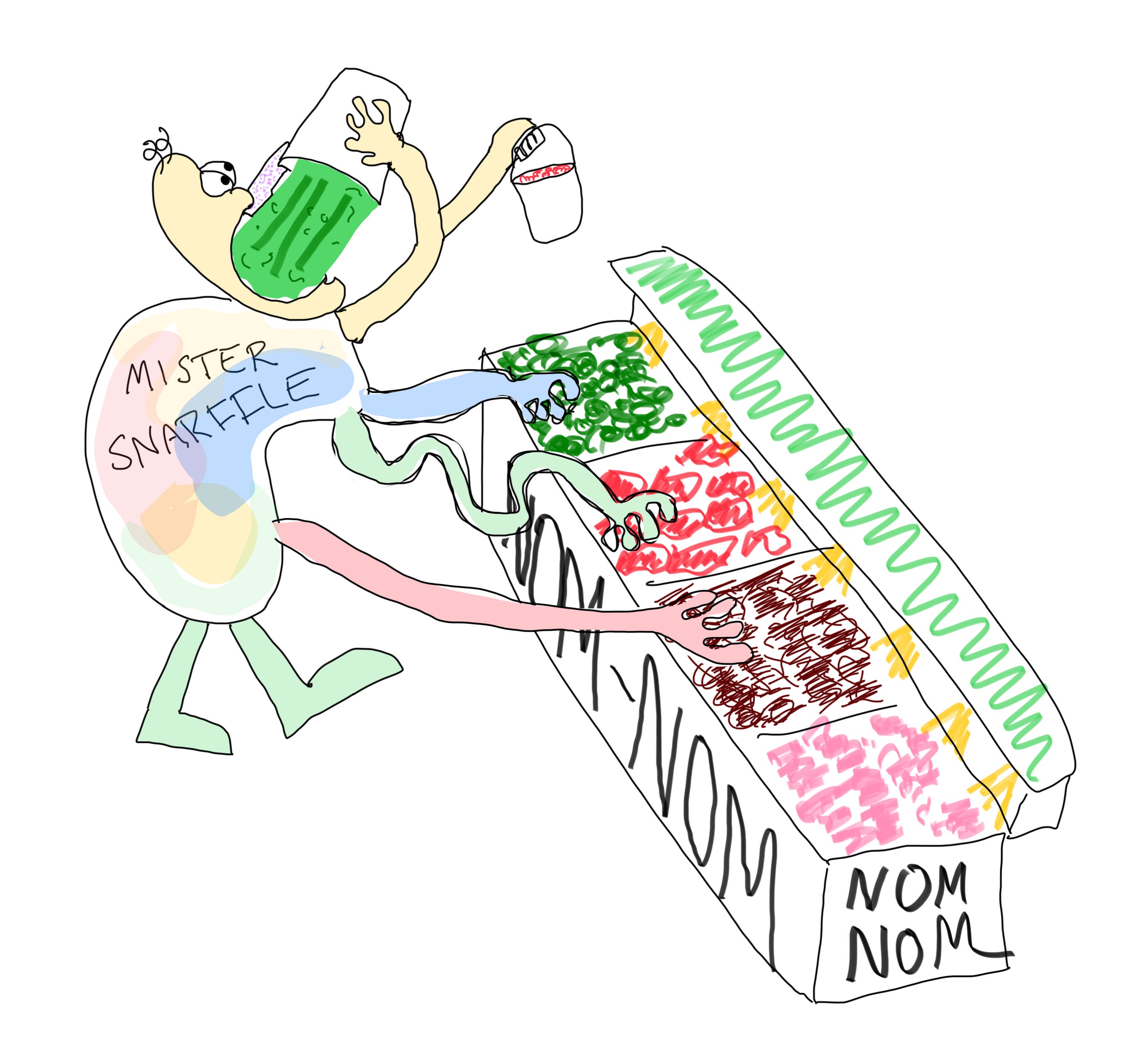
A story – unlike real life – cares about what your character thinks and does.
In the world of fiction, the theme (the story’s underlying message / meaning) exists to reinforce your main character’s belief system (or challenge it).
Mufasa (The Lion King) teaches Simba that the circle of life is important to all creatures, and the film reaffirms that theme through Simba’s exile and return, when he finally takes his place as king, restoring balance to the grasslands.
I Mean, Obviously…
None of this should come as a surprise to any writer with common sense.
We intuitively know that character is the most important thing in our story. Without an interesting character, you won’t captivate audiences, the story won’t go anywhere and it won’t carry any meaning.
And yet.
AND YET…
So many writers miss this.
Even, I would argue, the majority of paid, working writers who have been writing professionally for years.
They understand the importance of character, yet they don’t spend the time to do it right.
It’s like acknowledging that an airplane needs wings to fly and stopping construction when the plane looks like this:
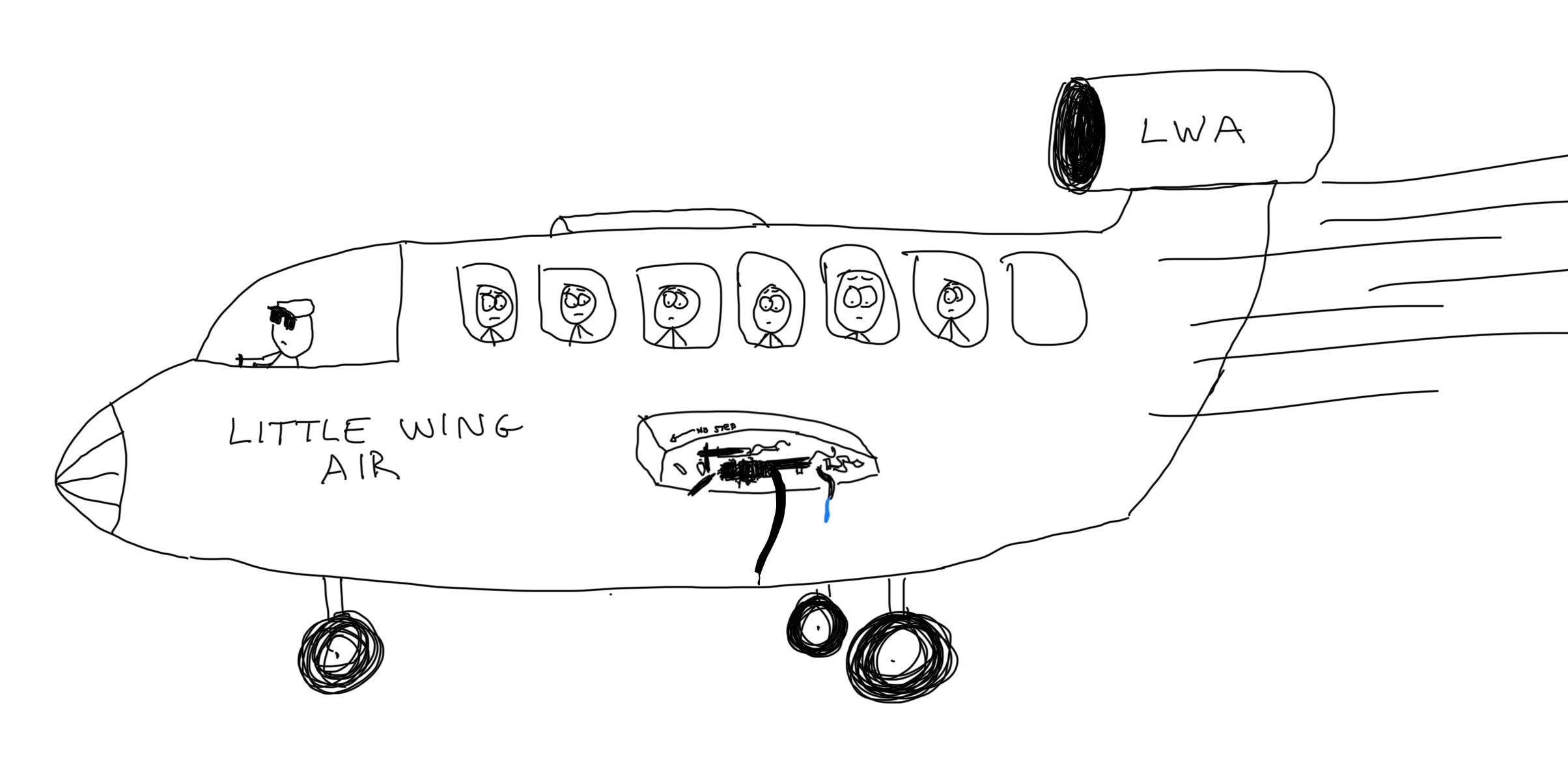
It is utterly illogical.
But why? How can intelligent, experienced professionals ignore such a fundamentally important aspect of their story?
Because it’s hard.
“Soon we must all face the choice between what is right and what is easy.”
–Albus Dumbledore
Character isn’t just the most important aspect of a script. It’s also the hardest.
It’s easy enough to come up with a name and a goal and a backstory. But an abstract list of traits is not the same as a fully-developed character.
Developing a character for real means putting them through a variety of imagined situations to stress test their personality and purpose against the world of your story.
This is hard work, and our primate brain doesn’t like hard work. It would rather save its calories for more important stuff like finding food and shelter.
This adaptation no longer serves us. It hurts our storytelling and our personal growth.
I would argue: It is The Devil in disguise.
The Devil’s Greatest Trick
The greatest trick the Devil ever pulled was convincing the world he didn’t exist.
–Charles Baudelaire
If that line sounds more familiar than an obscure 19th Century French poet, it’s also from the 1995 thriller The Usual Suspects.
Keyser Söze – the proverbial Devil – utters it when he’s being questioned by the police. Except the detectives investigating the case don’t know he’s Söze, the elusive Turkish crime boss. They know him as Verbal Kint, a soft-spoken con artist with a physical disability. He’s toying with them. Playing the part of someone who couldn’t possibly be responsible for the deaths of dozens of drug runners aboard a destroyed cargo ship.
There are a bunch of different meanings you can infer from the quote, but my takeaway is this:
Our worst blind spots are often hiding in plain sight.
As creatives, we craft narratives about who we are. About the work we’re doing. We tell stories to convince ourselves – and maybe even others – that the time we’ve spent on this or that part of the script is sufficient. We’ve been over it multiple times, we’ve run it through the story circle, what we have is good.
No. It’s great.
We can move on to more exciting stuff. Like the Act 3 action sequence.
And sometimes that’s true! Sometimes we have exactly what we need and any further work will only yield diminishing returns.
But more often than not, that’s just the Devil whispering in your ear: “We’ve got it. Let’s move on.”
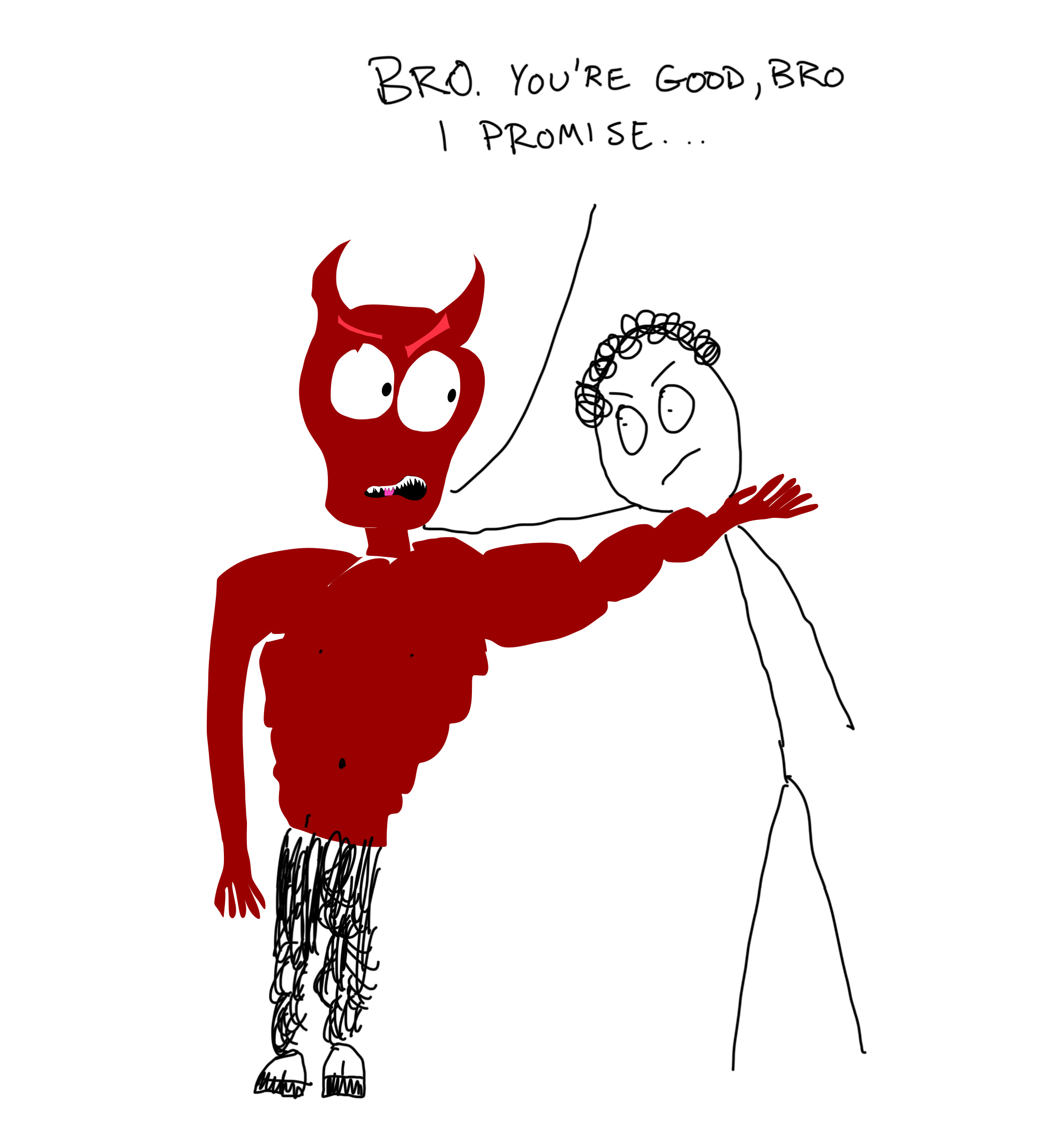
Confronting this blind spot and focusing on truly excellent character development is the only way to succeed.
And that’s why I’m pouring my effort into the process.
Why I’m Doubling Down on Character
For context, let me first lay out my goal:
I want to tell funny stories for a living.
That’s it. That’s all I want.
I want to set up the flywheel that lets me do this stuff professionally, all the time.
At first, I thought I might be able to do that via sketch comedy.
I would put out sketches with different characters each week and build an audience that way.
That model proved hard to sustain. Different sketches means different characters in different locations, which misses a crucial factor in the flywheel model: Repeatability.
I then thought I might be able to achieve the flywheel through micro-series which use the same location and characters to achieve that repeatability.
And while this was the right idea, my approach was all wrong: I started with premise and setting and worked backwards to find my characters.
Frankly, the characters were an afterthought, secondary to the setup and the production processes.
And as a result, I ended up with flat characters who lacked specificity or strong points of view (as I discussed in this post-mortem).
I realized that in order to achieve both repeatability and a stronger, more compelling story, I needed to double down on character.
Leading With Character: The Benefits
It’s Free & Fast
Working on a character don’t cost nothin’ but time.
If your story lacks a compelling character, you can spend a shit ton of money making up for that deficiency.
It’s a trap I see people fall into all the time: They lack a compelling main character, but rather than refocusing their effort towards that character, they instead choose to write these elaborate set pieces, jokes, action sequences or dramatic beats that require time and money to produce.
It’s the only way to make the story interesting, they think.
But it doesn’t make the story more interesting. It just makes it more expensive and time-consuming to produce.
If – however – your main character is inherently compelling, they can do whatever you want – even just talking to camera – and people will watch. That means a lot less time and resources spent on expensive set pieces and elaborate scenes.
It’s AI-Resistant
Generative AI is good at a lot of things. But it seems to struggle when it comes to developing compelling characters.
I have a theory about why that is:
AI’s training data is based on existing fiction characters.
Existing fiction characters are – on average – not super compelling. That’s just the nature of the talent distribution curve.
Gen AI’s outputs are essentially a prediction based on the prompt + the mean of the (weighted) training data.
By definition, the mean of its training data is mediocre, so the output will also be mediocre.
Even Lionsgate – who has partnered with Runway to provide tens if not hundreds of thousands of hours of training data for their generative system – is struggling to generate acceptable outputs.
I guarantee this is due to the difficulty in generating performances by characters.
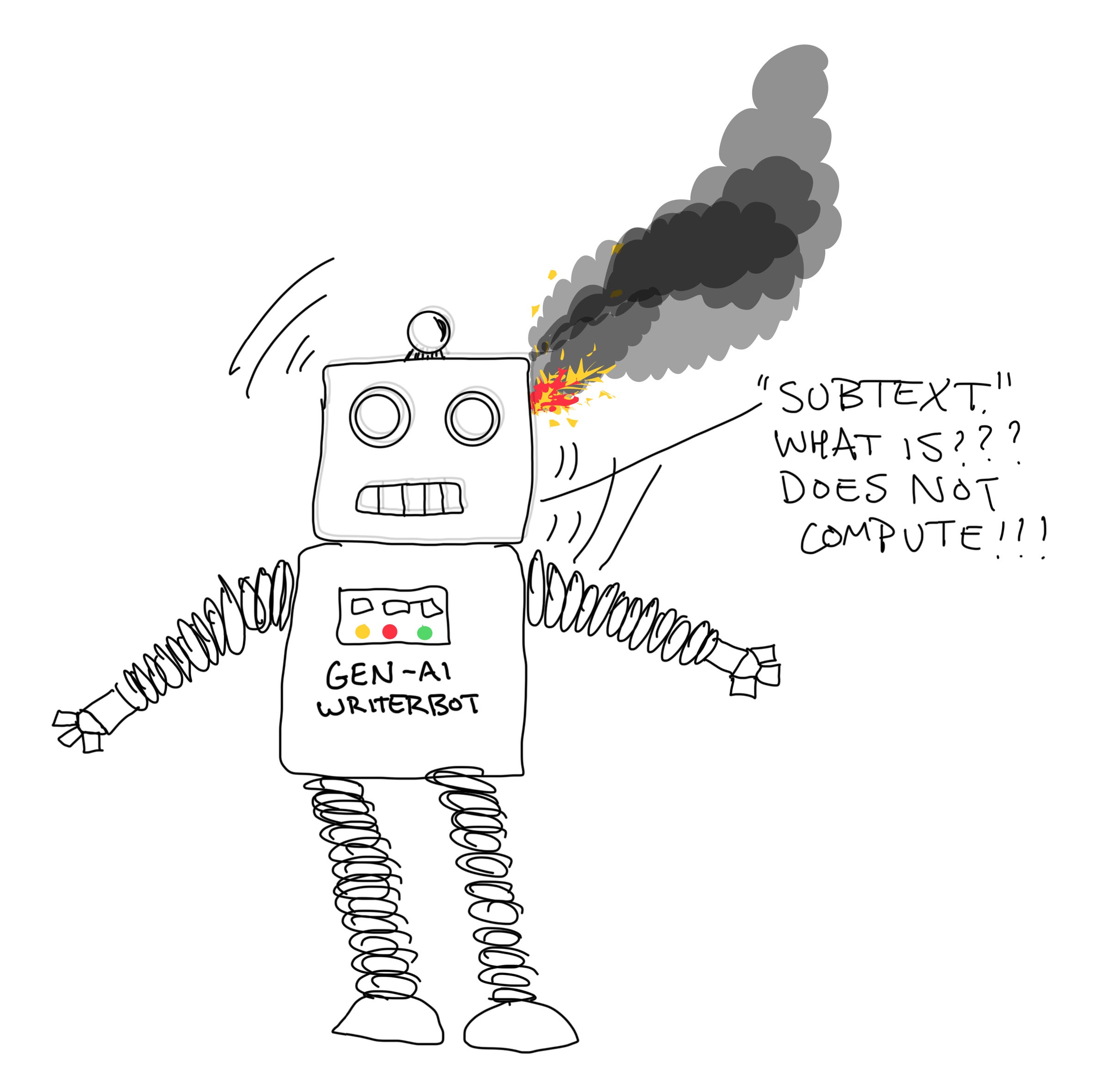
By focusing on character (and finding the right actor for that character), you’re given a huge leg up when going up against the oncoming rush of infinite content, as described by
.Character Outperforms Premise
Lastly – and most importantly – Character performs better than premise 9 times out of 10.
Let’s use an example from my recent endeavors as a content creator.
My sketch channel – LoFi Comedy Collective – was predicated around comedic sketches based on funny scenarios. Character was an afterthought. We produced 15 videos which took approximately 50-60 man hours over 4-5 months to shoot & edit, and the YouTube channel ended up with 33 subscribers and 12,800 views.
Casen Pointe, on the other hand, is entirely character-based. The name of the show is the name of the character and I can tell you with certainty that my writing partner and I did more to break character than I spent writing all of LoFi’s sketches combined.
And after 1.5 months and a total of about 4 hours of work on Casen Pointe (including shoot and edit), the channel has 22 subscribers and 6,500 views.
For the effort, Casen Pointe outperforms LoFi by a factor of ~10.
I’m not saying that Casen Pointe is perfect, or even very good. I’m saying that for the level of time, effort and (to a certain extent) money, I have gotten and will get more out of the project than my efforts with LoFi. Both in learnings and in audience.
The Casen Pointe shoots didn’t require elaborate setups and largely just consisted of our (admittedly incredible) actor playing Casen direct-to-camera. 2-3 hours of shooting yielded about 10 pieces of content that we’re rolling out twice per week.2
Could this relative success be a fluke? A symptom of the algorithm’s randomness? Maybe. But there’s another case study I want to call your attention to:
Chit: A Character Study
I know I’ve mentioned Chit a bunch of times in the past, and it took me a beat to determine what it was about this YouTube / Instagram / TikTok character that made him so compelling (and successful).
There are a ton of new YouTube series that have launched in the past couple years: 45 Years Left, Shanked, Amy’s Dead-End Dreamhouse, Minimum Wage…
But – as far as I can tell with the numbers I have available – Chit has outpaced all of them in terms of audience size and growth.
There’s nothing new about a series that takes place in an office setting. By the looks of it, the production value of Chit is far below that of these other series. And it’s not like the writers behind Chit are decades more experienced than those who created those other shows.
Chit’s success comes down entirely to character. It’s a good sign that the show shares its name with the character (technically, it’s called The Chit Show).
But there’s way more to it than that. And I think I’ve identified the key traits that have fueled the show’s singular growth.
Chit is Unique
Chit has a look that can best be described as iconic. The character is visually distinct (although he has been compared to comedy genius Will Forte) and immediately recognizable.
Every time I ask someone new to Chit if they’ve seen the series, they tilt their heads, confused, until I show them a photo of him, to which they (almost always) respond: “Ohhhhhh, that guy! Yeah, he’s funny!”
Even if they don’t know his name or the name of the show, they know his face. No other series mentioned above has the benefit of having a face so noticeable (and merch-able).
But beyond just looks, Chit has all sorts of unique personality quirks. He’s bizarrely confident and he’s obsessed with the most specific stuff, like Chapell Roan, The Masked Singer and a golden pineapple, the reward for obtaining employee of the month.
He’s weird. In a good way.
Chit is Relatable
Yet despite being so weird, Chit is also incredibly relatable. We all have a Chit in our lives: The awkward friend or coworker who doesn’t really understand social norms. The person who sees things from a totally different perspective and surprises us whenever we learn something new about them.
Even though he’s presented as an unapproachable weirdo, if you actually watch the series, you start to see Chit as generous, kind and multi-talented.
We love to watch people we like, and we really like Chit because of who he is and how he treats his coworkers and friends.
Chit’s Comedy Stems from Character
The show doesn’t rely on “jokes” to convey comedy. They don’t lean on clever punchlines (although Chit himself has plenty of memorable catchphrases). The creators don’t treat the show as a place to air their stand-up routines (which is a practice I spit on in my post on how to not be UnFunny).
All of the show’s comedy comes from Chit’s character and his interactions with – and reactions from – the characters around him.
He is socially inept and often makes his coworkers uncomfortable. He is strangely confident and shirks his responsibility at work. He says the wrong things and doesn’t know how to “read the room.”
All of the ingredients for character-driven – and attitude-driven – comedy are built into the character himself and the supporting characters around him.
Chit’s Character is Surprisingly Deep
Just when we think we’ve got a bead on who Chit is, the show throws us a curveball.
At the start of the series, we see a do-nothing loser who always says the wrong thing. Then we start to see his humanity and he surprises us with things we never knew about him:
He has a modeling background and is JACKED
He’s wealthy enough to afford multiple jet skis
He can slam dunk a basketball and crank out pull-ups
He has a gorgeous girlfriend who is a professional wrestler
He has a background in musical theatre
The creators of the show could have set up Chit as “that awkward coworker” and left it at that.
But they decided they wanted to take the character in new and unexpected directions. They wanted to add emotional depth, and that is the difference between a sketch and a show.
If we were to chart the strengths of Chit against these other, less successful YouTube shows, we’d end up with something that looked like this:
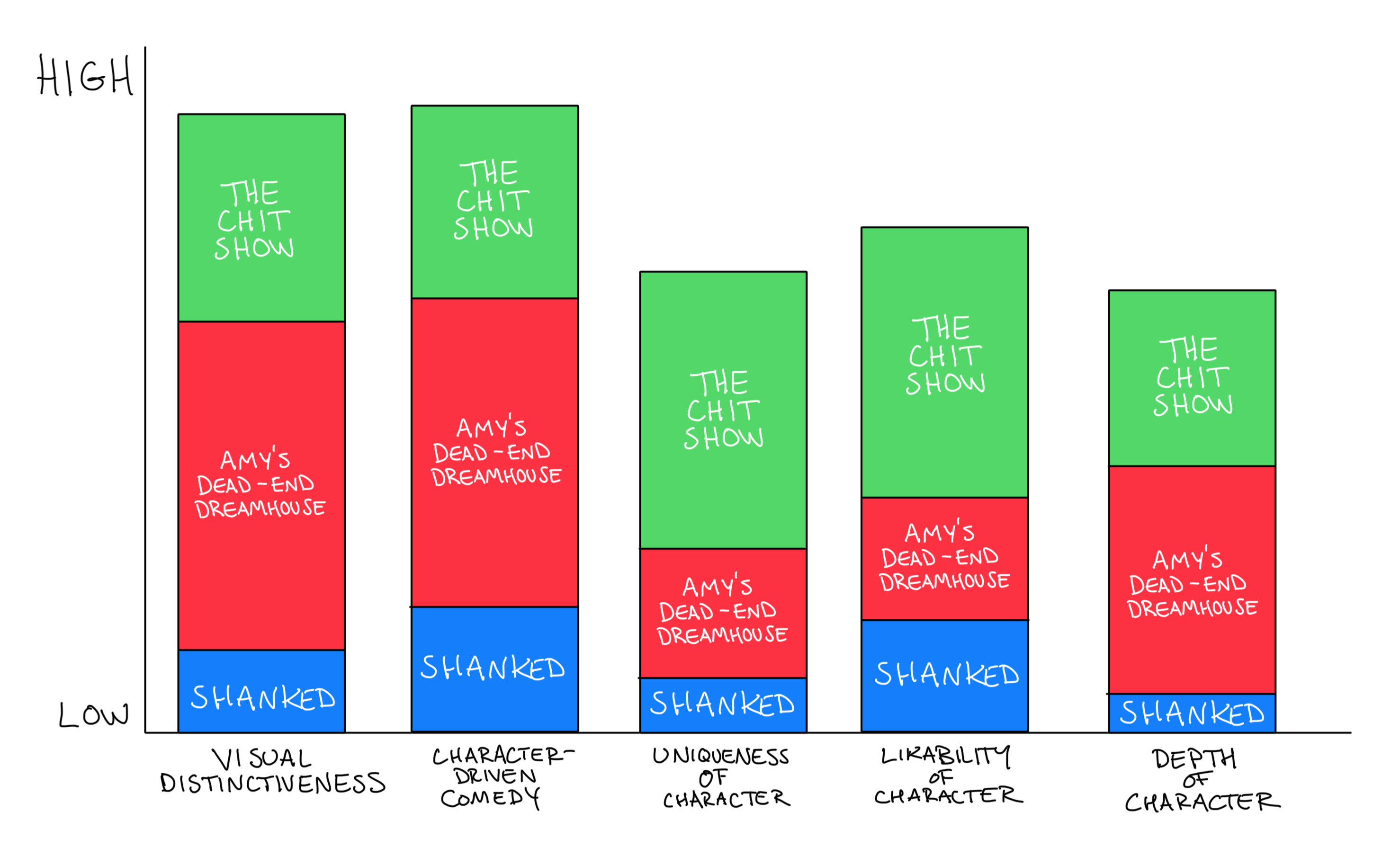
How did I come up with these criteria?
Part of it is just considering what I gravitate towards when watching a show / movie. If there’s a character I like, I take note of why I’m drawn to them. What is it about their personality or belief system that makes me align with them and root for their success, even if they’re the “bad guy?”
But part of it comes from a different place: I’ve read a lot of bad scripts. Scripts with weak, boring characters at the helm. And I’ve also taken note about what makes these characters not so good.
Next week, I’m going to outline the traits that make a character truly compelling and diagnose the not-so-good elements that are dragging your own characters down.
Be sure to…
And stay tuned,
Jon
Is it obvious that I’m not a huge horror movie fan?
Yes, I’m also producing full-fledged digital episodes, and these are significantly more expensive and time consuming than the social / UGC content, but this was a personal choice made separately from the social strategy, and yes, I see the hypocrisy in the decision.
Great stuff here Jon, looking forward to reading the other bits in the series! Think I personally am guilty of focusing more on plot/concept than character a lot of the time!
raising my hand for more Mr. Snarffle👋